
NIR Drying for Industrial Processes
Near-infrared drying for industrial coatings, inks and functional layers – using direct energy input instead of indirect heating through air, contact surfaces or conventional IR dryers.
How Industrial Drying Technologies Differ
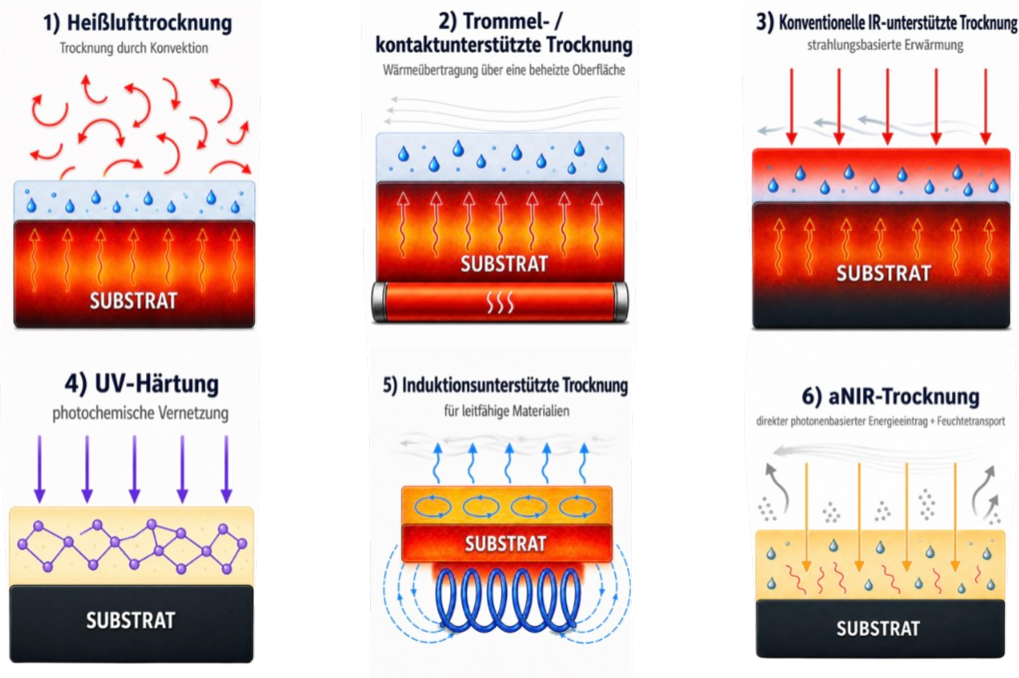
Industrial drying technologies differ primarily by how energy enters the process. That energy-transfer method affects installation space, line speed, process stability, energy demand and substrate stress.
- Hot air drying transfers energy through heated air and convection.
- Contact drying transfers heat through a heated surface.
- Conventional IR drying is associated with strong surface heating.
- UV curing relies on photochemical reactions, not thermal drying.
- Induction heating works directly only with conductive materials.
- NIR drying introduces photonic energy directly into the applied material layer.
In adphos systems, this direct energy input is combined with controlled air management to remove evaporated water, solvents or process vapors from the drying zone.
Why NIR Drying Is Not Conventional IR Drying
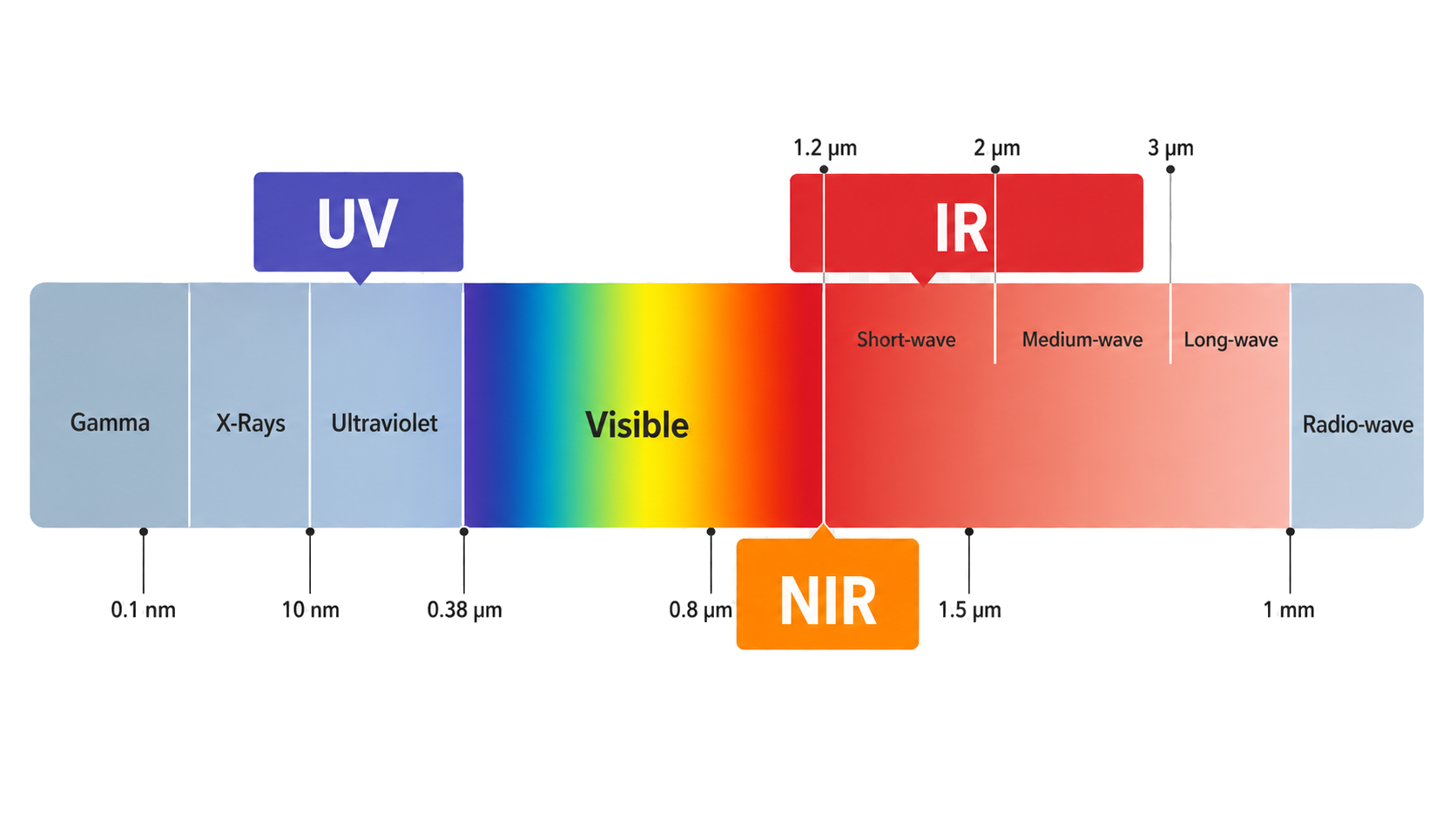
NIR is part of the infrared spectrum, but industrial NIR drying should not be treated as the same process as conventional IR drying.
The practical difference is the process effect. Conventional IR dryers are associated with stronger surface heating. adphos aNIR® and aLITE® systems are designed for direct, controlled energy input into the applied layer, helping reduce thermal stress on the substrate while improving process control.
For that reason, the term “IR dryer” does not accurately describe adphos technology. aNIR® and aLITE® are near-infrared-based process technologies for industrial drying, curing and thermal treatment – not conventional IR dryers.
Process Effects of Direct Photonic Energy Input
When energy is introduced directly and quickly into the process layer, drying, curing and thermal treatment can be controlled more dynamically than with slower, indirect heating methods.
Power can be adjusted quickly when line speed, coating width, layer thickness or process conditions change. Depending on the application, NIR drying can support:
- less scrap during start-up, changeover and process adjustments
- shorter drying sections and more compact machine layouts
- higher line speeds and improved throughput
- lower thermal load on sensitive substrates
- smaller cooling zones due to less unnecessary heat transfer
- more stable drying conditions across varying production parameters
aNIR® and aLITE® systems are electrically powered. When supplied with renewable electricity, operation without direct process-related CO₂ emissions is possible.
Industrial NIR Drying with adphos aNIR® and aLITE®
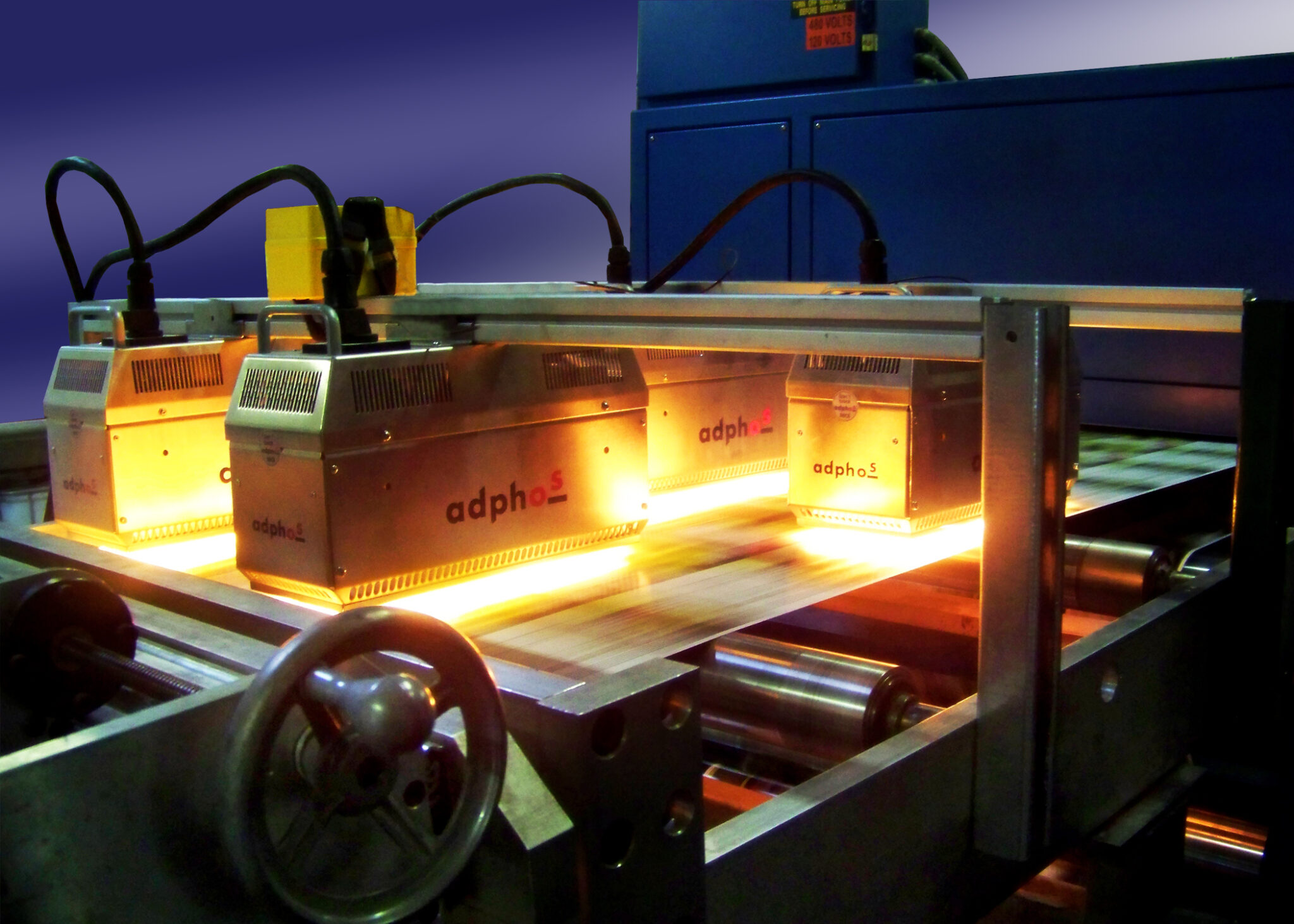
adphos develops NIR drying for industrial processes and thermal process systems based on aNIR® and aLITE® technology. These systems use near-infrared energy as the central energy source and combine it with controlled process air to remove moisture, solvents or process vapors.
They are used in markets including printing and packaging, coating, printed electronics, battery electrode coating, coil coating, PET processing and functional coatings.
Depending on the process, adphos can supply standard modules or develop customized process solutions. System design is based on the material, substrate, layer thickness, line speed, available installation space and required process result.
FAQ
What does NIR drying mean?
NIR drying means drying with near-infrared energy. It uses photonic energy to support evaporation, curing or other thermal treatment steps in industrial production.
Is NIR drying the same as IR drying?
No. NIR is part of the infrared spectrum, but it is not the same as conventional IR drying. adphos aNIR® and aLITE® systems are designed for direct, controlled energy input into the applied layer, combined with integrated vapor removal.
Is NIR drying the same as hot air drying?
No. Hot air drying transfers energy mainly through heated air and convection. NIR drying introduces energy more directly into the applied material. Process air may still be used, but primarily to remove evaporated moisture, solvents or process vapors.
Can NIR drying support CO₂-free production?
Yes. aNIR® and aLITE® systems are electrically powered and do not generate direct process-related CO₂ emissions. When powered by renewable electricity, operation without direct CO₂ emissions is possible.
adphos Group
Mail: info(at)adphos.de / Tel.: +49 8061 395-0
AIT
adphos Innovative Technologies GmbH
ATP
adphos Thermal Processing GmbH
ADP
adphos Digital Printing GmbH
Adphos North America, Inc.
Mail: info(at)adphosna.com / Tel.: +1 (262)790-9100
adphos UK, Ltd.
Mail: sales(at)adphos.de / Tel.: +44 1235 227230
