
Where Is Your Production Line Losing Yield?
In many industrial drying, coating, curing and thermal treatment processes, the strongest business case is not energy savings alone.
It is often found in the losses that happen every day: scrap, startup waste, changeover time, unstable process conditions, manual adjustments and unnecessary runtime for the same output.
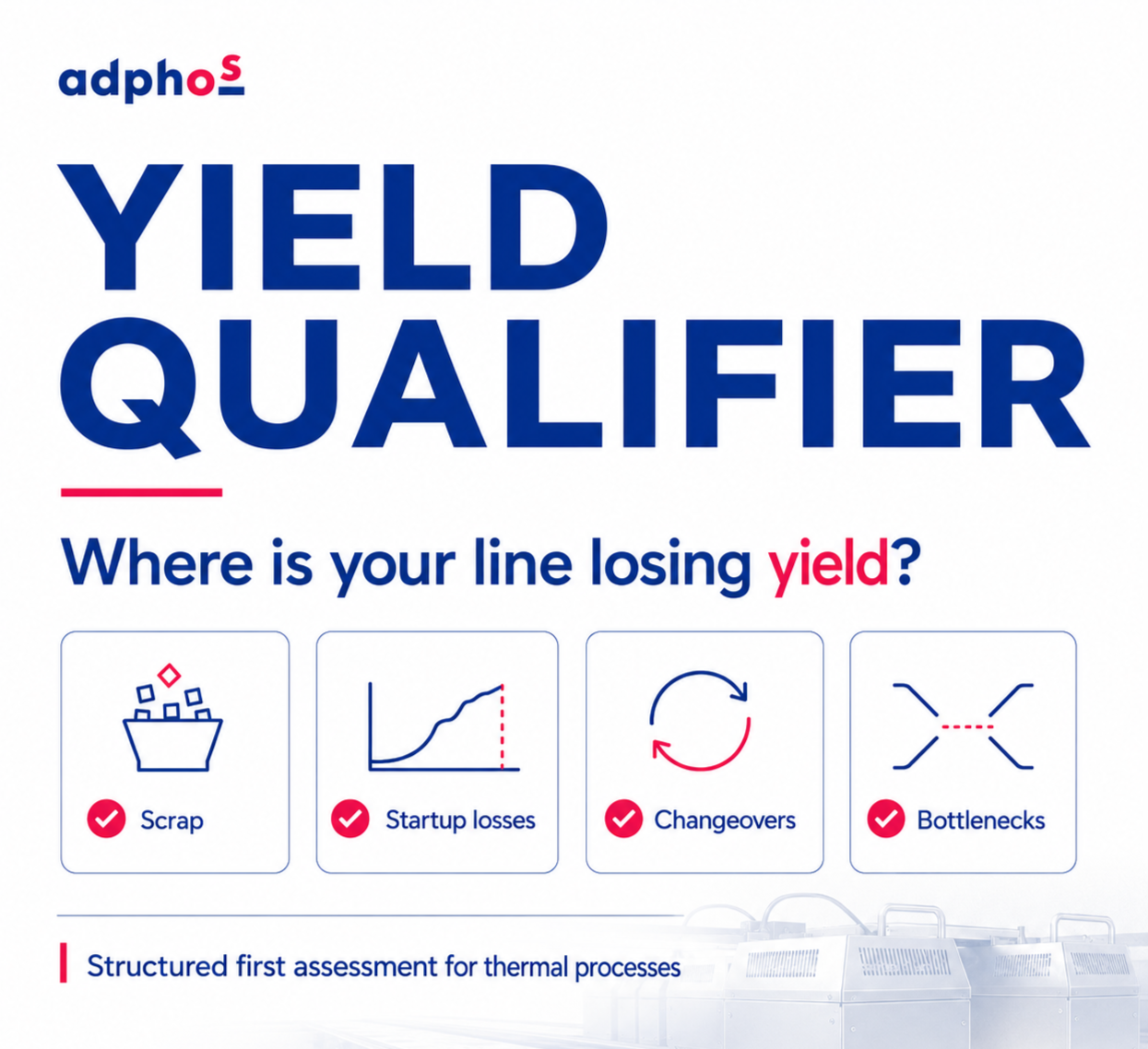
The adphos Yield Qualifier helps to determine whether your current process may offer measurable potential for higher output, reduced losses and stronger overall economics.
1. Energy matters. Yield often matters more.
Energy efficiency is important in every investment decision. But in many production environments, the larger economic impact is not found in energy cost alone. It is found in process losses that are already accepted as part of daily operation.
Common loss points include:
- scrap during unstable production
- material loss during startup
- long setup and changeover phases
- drying or thermal-treatment bottlenecks
- manual process corrections
- reduced line speed
These losses affect output, cost per unit and payback time. That is why the Yield Qualifier begins with the real operating conditions of your line, not with a theoretical calculation.
2. aNIR®: Targeted energy input where the process needs it.
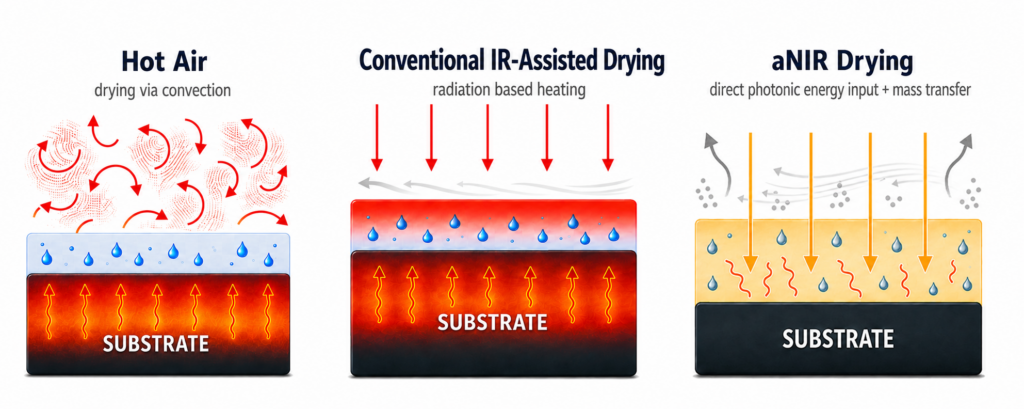
Most industrial drying processes still rely on hot air. Hot-air drying transfers energy mainly through heated air and convection, often requiring large air volumes, long dryer sections and significant heating of the surrounding process environment before enough energy reaches the applied layer.
Conventional IR drying heats up the substrate directly, but it creates strong surface heating. Depending on the material, coating structure and line speed, this may limit process control or substrate handling.
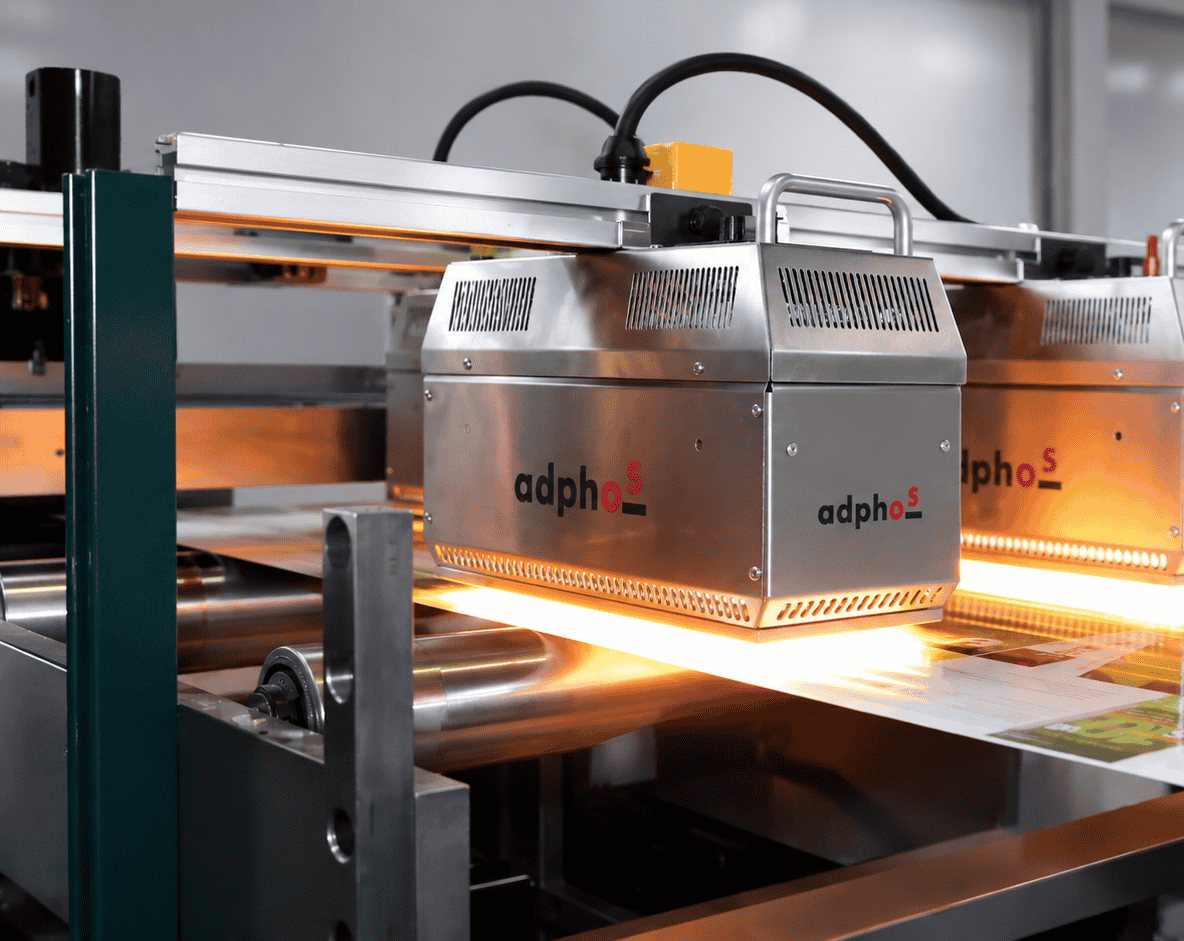
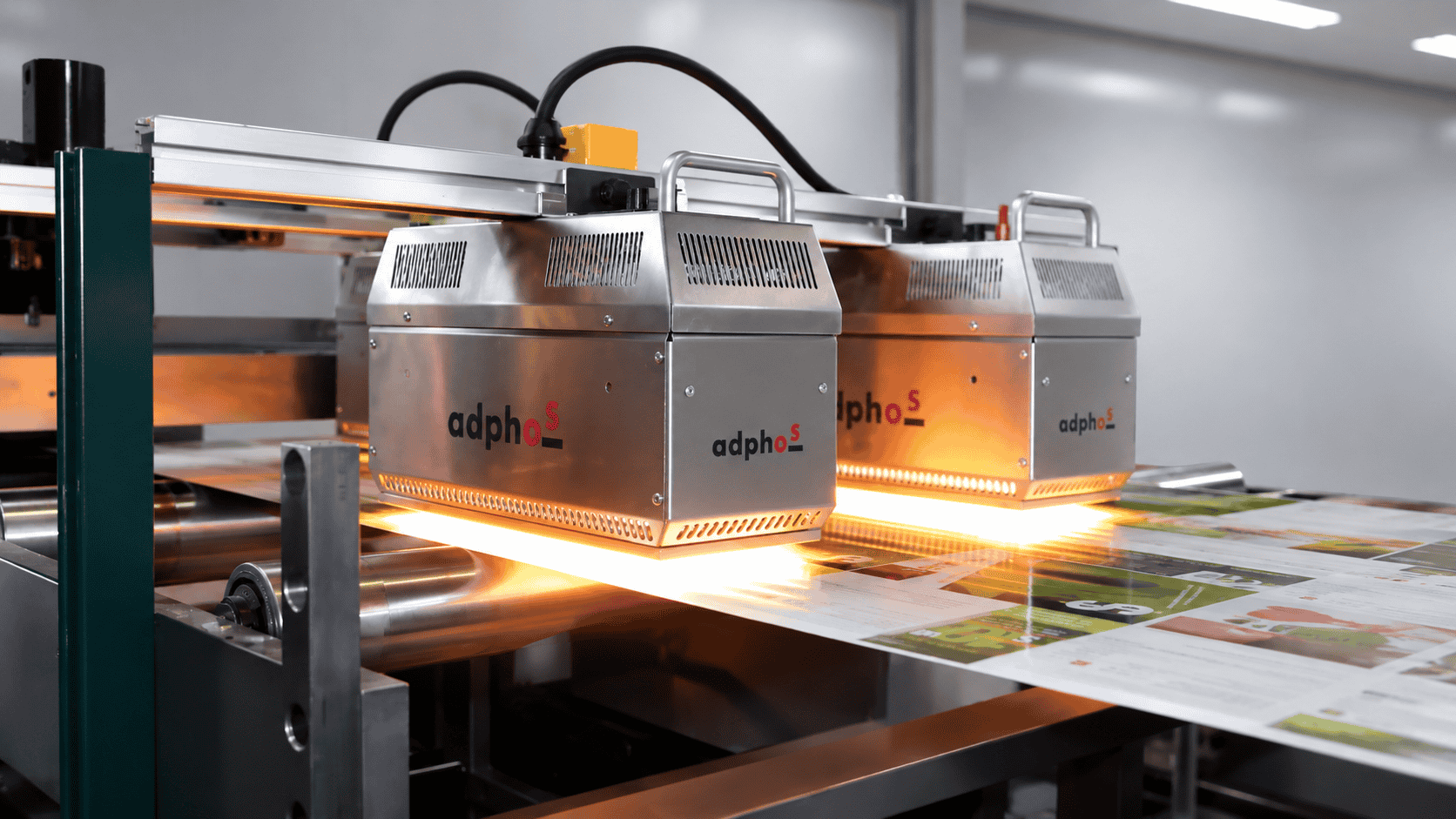
adphos aNIR® technology follows a different process logic: direct, controllable photonic energy input into the applied wet layer, in combination with controlled process airflow to remove evaporated water, solvents or process vapors.
For production teams, this matters because targeted energy input can help reduce scrap, shorten dryer sections, improve process response, reduce unnecessary thermal load and support stable operation during startup, changeover and changing line conditions.
3. What the Yield Qualifier checks
The Yield Qualifier is a structured first assessment for industrial drying, coating, curing and thermal-treatment processes. It is designed to identify whether your current process may hold meaningful potential for improved yield, higher output or stronger economic performance.
The review considers:
- current process and application data
- substrate, coating or material
- line speed and output limitations
- drying, curing or thermal-treatment bottlenecks
- scrap rates and typical loss points
- startup and shutdown losses
- setup and changeover effort
- operator intervention
- potential impact on productivity and the business case
The goal is not to force a predetermined result. The goal is to create a realistic first indication of whether a deeper technical and economic evaluation is worthwhile.
4. Reviewed together with adphos
The Yield Qualifier is not intended to be a standalone form that you complete without support. We prefer to review it together with you.
This helps to ensure the inputs reflect your actual production setup, operating conditions and process limitations. It also helps to avoid assumptions that look precise on paper but do not match how the line actually runs.
The result is a practical first assessment based on your process realities, supported by adphos experience in industrial drying and thermal process technology.
5. Is there hidden yield potential in your process?
If scrap, startup losses, changeover time, bottlenecks or unstable process conditions affect your output, the Yield Qualifier can be a useful first step.
Use our contact form and write “Request Yield Qualifier” in your message. We will contact you to review the assessment together.
FAQ
Is the Yield Qualifier a calculator?
No. It is a structured first assessment reviewed together with adphos. The goal is to identify whether a process may hold relevant technical and economic potential.
Is aNIR® the same as conventional IR drying?
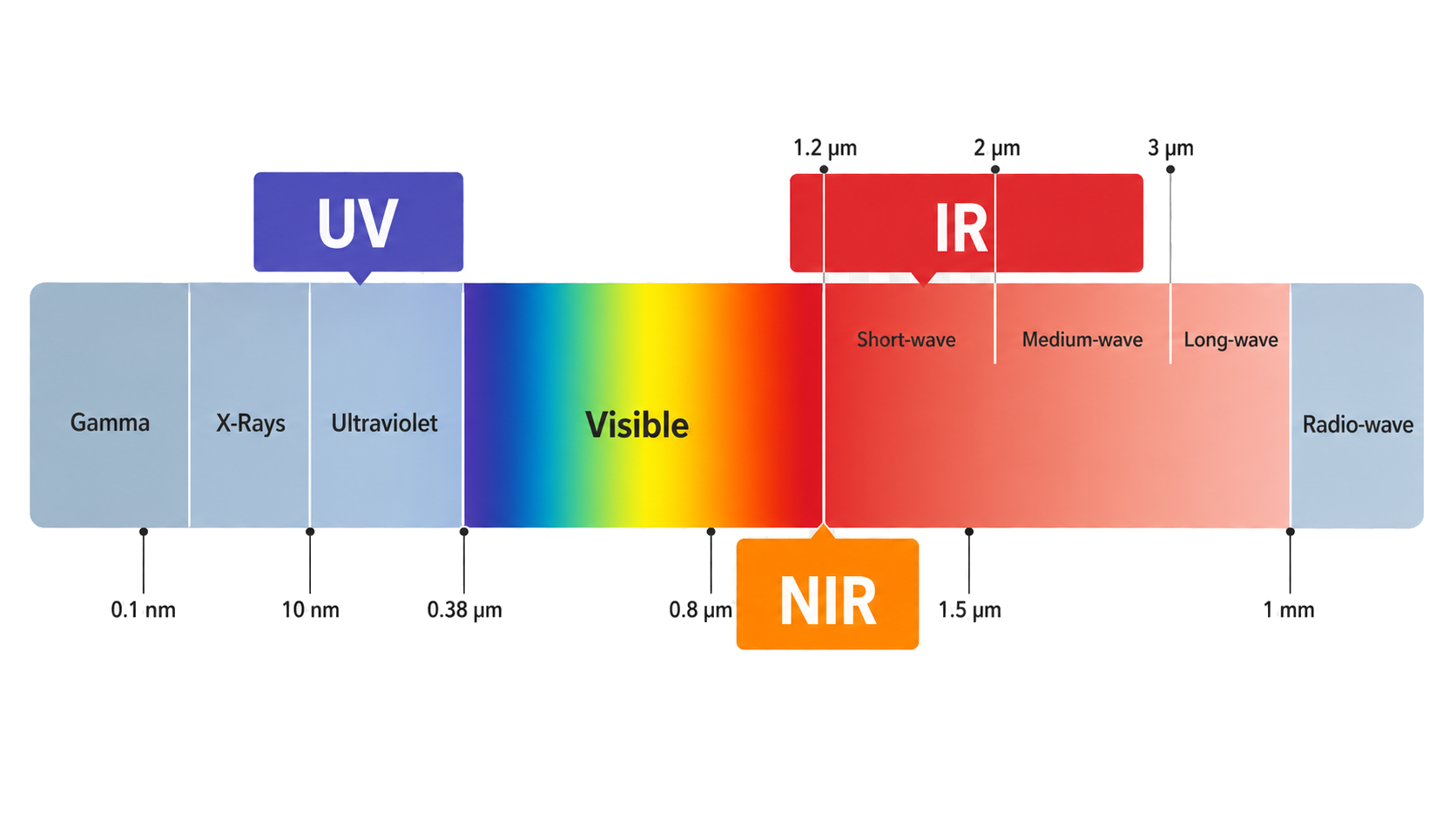
No. Although NIR falls within the infrared spectrum, adphos aNIR® is based on direct, controlled energy input into the applied layer and integrated defined vapor removal.
Is aNIR® the same as hot-air drying?
No. Hot-air drying transfers energy mainly through heated air and convection. aNIR® uses direct photonic energy input as the core process principle, with controlled process airflow to remove evaporated water, solvents or process vapors.
adphos Group
Mail: info(at)adphos.de / Tel.: +49 8061 395-0
AIT
adphos Innovative Technologies GmbH
ATP
adphos Thermal Processing GmbH
ADP
adphos Digital Printing GmbH
Adphos North America, Inc.
Mail: info(at)adphosna.com / Tel.: +1 (262)790-9100
adphos UK, Ltd.
Mail: sales(at)adphos.de / Tel.: +44 1235 227230
